My unique approach
Real answers, not guesswork.
There are many ways to practise chiropractic. My approach looks at the relationship between your spine, your nervous system and how your body functions. I listen to your story, assess spinal movement and neurological function, and use hands-on examination and computerized Insight scans to gather objective information. Then I explain what I find, what it may mean for you, and whether chiropractic care makes sense for your situation.
Not sure yet? Book a complimentary phone consultation with Dr. Gelber first.

What makes it different
Assessment first, then care that fits you
I don't guess. I bring together your health history, physical and neurological examination, spinal assessment and computerized Insight scans to build a clearer picture of how your body is functioning. Because your nervous system helps coordinate movement and responses to the demands of everyday life, I look beyond the location of your symptoms alone. I explain what stands out, how the findings may relate to your concerns, and what options make sense for you.
Beyond symptoms
Your spine, your nervous system and how you function
Your nervous system plays a central role in how your body senses, coordinates and responds to the world around you. It works alongside your muscles, joints and other body systems to help you move, maintain balance and adapt to changing demands.
The spine is an important part of this picture. Changes in spinal movement and the way your body coordinates movement can be worth investigating, particularly when discomfort keeps returning or function becomes more difficult. Your symptoms are important, but they may not tell the whole story. Understanding both your physical findings and relevant measures of nervous-system function helps me build a more complete picture before recommending care.
Worth paying attention to
Pain matters, but it's not the only reason to pay attention to how your spine moves and functions.
How I think about care
Find, adjust, adapt, thrive
Find
We look for patterns in spinal function, movement and neurological findings that may help explain your situation. Your symptoms matter, but they're not always the whole story.
Adjust
When appropriate, I adjust areas of your spine where movement is restricted. The aim is to improve spinal movement and function, while considering how these changes fit into your overall assessment.
Adapt
Your nervous system and body continually respond to the demands placed on them. We monitor how you're functioning over time and use your response to care, alongside your goals and examination findings, to guide next steps.
Thrive
The longer-term goal is to support better function and help you stay engaged in the activities that matter to you. Recommendations are individualized, and not everyone needs every phase.
Assess
What we look for
Understanding your spinal health means looking at more than posture alone. I combine a hands-on examination with movement assessment, neurological tests and computerized Insight scans to build a clearer picture of how your spine is functioning and how your body is responding.
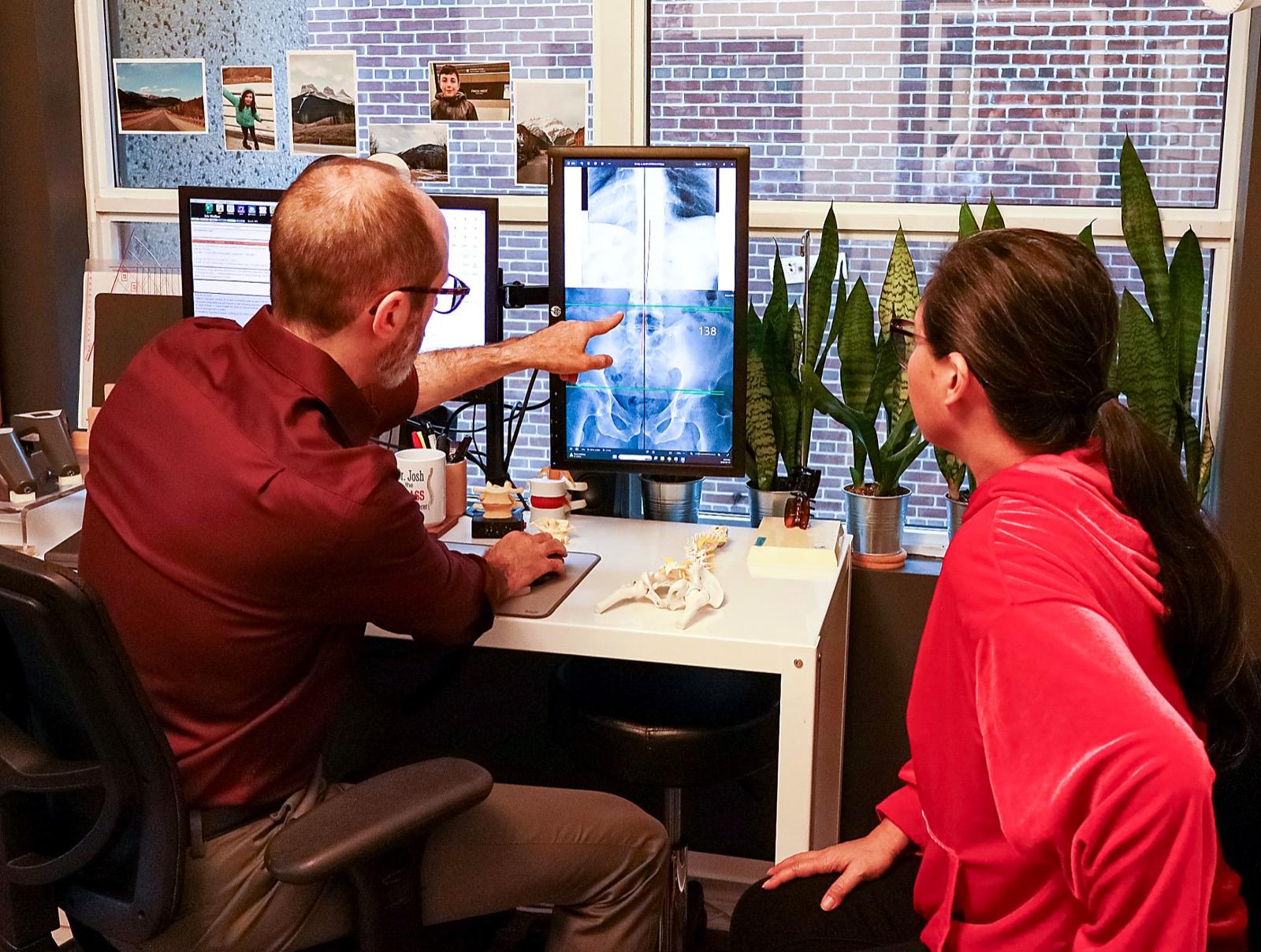
For adult patients, X-rays are commonly taken or existing imaging is reviewed as part of the evaluation when clinically appropriate. Decisions about additional imaging depend on your history, examination findings and individual circumstances. Children under 12 are generally not X-rayed, and we do not take X-rays during pregnancy.
Spinal structure and posture
How your spine is positioned and how its structure may inform the assessment.
Movement and function
How your spine moves, your range of motion, and where movement may be restricted.
Neurological findings
Findings from neurological tests, considered alongside your symptoms and history.
Objective measurements
Insight scans measuring muscle activity, skin temperature patterns and heart rate variability.
Insight scans
Your nervous system, measured
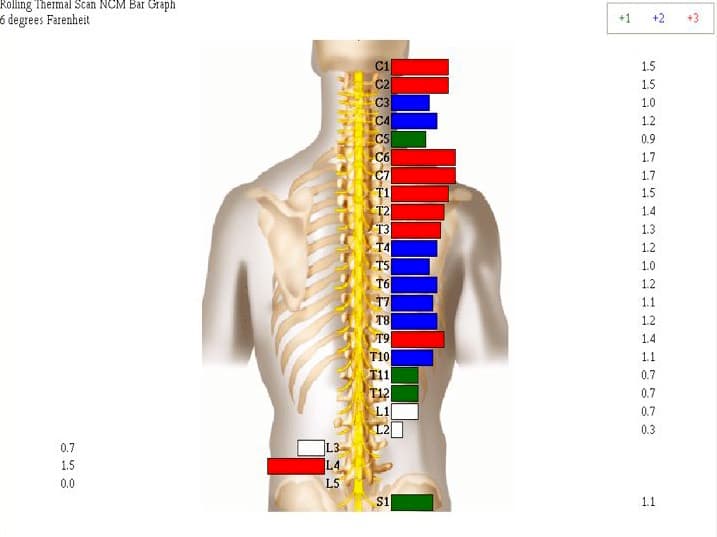
Temperature patterns
NeuroThermal
This scan compares skin temperature patterns on either side of your spine. These patterns provide additional information that I consider alongside your history and other examination findings. Skin temperature can be influenced by several factors, so the results are interpreted in context.
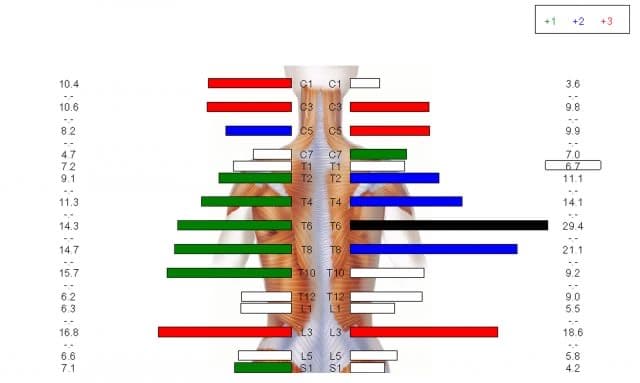
Muscle activity
NeuroCore
Surface electromyography (sEMG) measures electrical activity in muscles along your spine while you maintain an upright posture. It provides information about patterns of muscle activity and a baseline that can be compared over time.
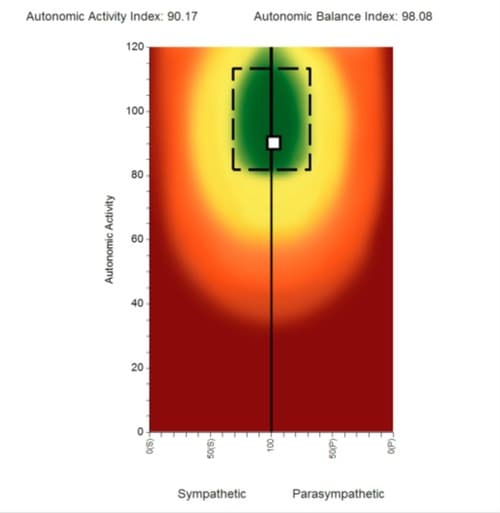
Heart rate variability
NeuroPulse
Heart rate variability (HRV) measures the natural variation in time between heartbeats. It provides information related to autonomic nervous-system regulation and how the body responds to changing demands. It is one part of the overall assessment, not a standalone stress test or diagnosis.
Bringing the findings together
These scans give me additional information about muscle activity, temperature patterns and heart rate variability. They don't diagnose a condition on their own or explain every symptom. Their value comes from considering the results alongside your history, physical and neurological examination, and other relevant findings when discussing your care.
Getting started with care
Your results, in plain words
The assessment is only valuable if it helps us make sense of what you're experiencing. At your Report of Findings, I'll walk you through what we found across your history, examination and computerized scans, explain what stands out, and discuss how the findings may relate to your concerns and goals.
I'll explain my recommendations, answer your questions and help you understand your options. If we decide to proceed, your care plan will be based on your individual findings, goals and response over time. The aim is not simply to focus on where something hurts, but to understand your situation more fully and help you make informed decisions about your health.
What patients say
In their own words
Dr. Gelber's approach is not to just deal with your current issue, rather he takes a holistic approach and assesses your overall health history to understand the connections and root causes of what brought you to him… He provides knowledge videos, at-home exercises and tools that empower you as a patient.
Everyone is friendly and accommodating with the visits streamlined so I don't miss a lot of work… Dr. Gelber always takes the time to answer questions in a way that is easy to understand and leaves me feeling heard, not rushed.
Individual results may vary. Every patient's experience is their own.
Where to start
Let's find out what better could look like for you.
Ready to take the first step?
If something has been bothering you, or you're simply ready to understand your spinal health better, let's start with an evaluation. We'll look at what's going on, discuss what we find, and work out whether we're a good fit to move forward together.