Chiropractic care at Bloor and Spadina
Stress and nervous system care in the Annex
Stress rarely stays in your head. It can show up as tight shoulders, a stiff neck, or a body that never quite seems to switch off.
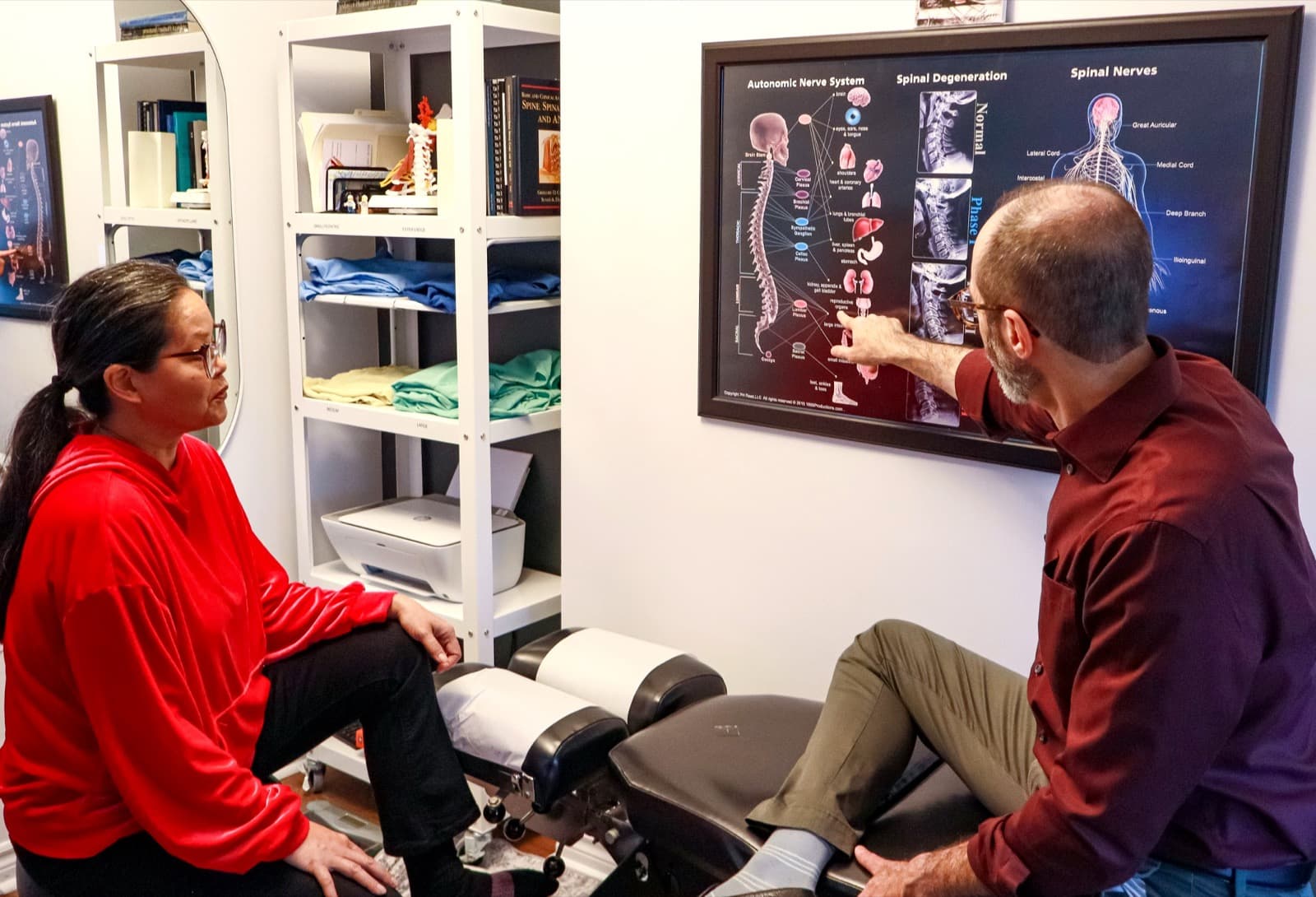
Physical, chemical, and emotional stress all place demands on your body. My approach is neurologically focused chiropractic care, which means I look at how your spine moves, assess relevant neurological findings, and consider how your body is responding to the demands placed on it.
Rather than guessing based on symptoms alone, I want to understand what your examination reveals and whether chiropractic care makes sense for your situation.
What brings people through the door?
- Neck and shoulder tension that never fully lets go
- Feeling wound up by the end of the day
- Headaches that seem to show up during busy weeks
- Wanting to understand how stress may be showing up in their body
How I assess it
Every first visit starts with a conversation and a thorough examination. I assess posture, spinal movement and range of motion, perform appropriate orthopedic and neurological tests, and carry out a hands-on spinal examination. Computerized Insight scans add objective information about muscle activity, skin temperature patterns, and heart rate variability.
NeuroPulse measures heart rate variability (HRV), the natural variation in time between heartbeats. It provides information related to autonomic nervous-system regulation, which I consider alongside your history, physical examination, and other findings. No single scan tells the whole story.
My goal is to build a clearer picture of your spinal function and overall findings before recommending a care plan.

What care can involve
At your second visit, I explain what I found, how those findings may relate to your concerns, what I recommend, and what it costs. If chiropractic care is appropriate and you choose to proceed, care generally begins then.
- Chiropractic adjustments tailored to your examination findings
- Spinal traction when appropriate
- Practical guidance for managing everyday demands at home and work
There isn't one care plan for everyone
My recommendations depend on what we find, your circumstances, and what you're hoping to achieve. For some people, early care focuses on comfort and moving more easily. Depending on their needs and progress, the focus may later shift toward spinal movement and how the body adapts to everyday demands.
We review your progress along the way and adjust the plan when needed.
What patients say
In their own words
I had tried chiropractic care in the past with mixed results… The tension in my body has been steadily lessening, and the nervous system regulation piece has been especially meaningful… I'm very grateful for the care, guidance, and nervous-system-informed approach I've received here.
Dr. Gelber did a thorough evaluation to understand my situation and what I needed… I appreciate that after each session, Dr. Gelber gives me a little reminder about the importance of taking a moment to breathe, thus relieving any stress or thoughts that might be causing me discomfort.
As a fairly new person to chiropractic treatment I can say that it's been a great experience so far: I've learned a lot about how connected our nervous system is to our spine…
Individual results may vary. Every patient's experience is their own.
Questions
Common questions
Can chiropractic help with stress?
Stress affects people in different ways, and chiropractic care isn't a direct treatment for stress itself. If you're experiencing neck or shoulder tension, stiffness, or related movement concerns, an assessment can help determine whether spinal or movement-related findings may be relevant. I'll explain what I find and whether chiropractic care is appropriate for your situation.
What is heart rate variability?
Heart rate variability (HRV) is the natural variation in time between heartbeats. It provides information related to autonomic nervous-system regulation and how the body responds to changing demands. At the clinic, the NeuroPulse Insight scan measures HRV as one part of your assessment. It doesn't diagnose stress or tell the whole story on its own; I interpret it alongside your history, examination, and other findings.
Have another question? Visit our Frequently Asked Questions page or contact our team. We’re happy to help you understand what to expect.
Ready to take the first step?
If something has been bothering you, or you're simply ready to understand your spinal health better, let's start with an evaluation. We'll look at what's going on, discuss what we find, and work out whether we're a good fit to move forward together.
Questions before booking? Call 416-967-4466.